Showing posts with label Sehnsucht. Show all posts

4/19/17

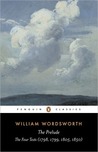
The Prelude The Prelude by William Wordsworth
My rating: 3 of 5 stars

I knew C. S. Lewis loved this poem, so I wanted to read it.

I enjoyed the first eight or nine books, which focus on Wordsworth's life and early intellectual growth. Specifically, I really enjoyed the passages where he recounts his youth in the Lake Country, his life at Oxford, a trip he took through Europe during the French Revolution, and a long vacation hiking in the Alps. He makes you feel as if you are there, and he has the same sorts of sehnsucht experiences that C. S. Lewis describes in Surprised by Joy. (In fact, the title "Surprised by Joy" comes directly from a Wordsworth poem.)

I read up to the point where the poem becomes almost totally philosophical, in the last three or four books. But in the portion that I read, there are passages that are beautiful and profound.

I am a man too much of my time, with too short an attention span, too little patience, and a mind affected too much by screens, to fully appreciate the poem. So three stars says more about me than it does about Wordsworth, who is one of the Greats.

View all my reviews

6/9/16

I came to these poems as a young man, an aspiring poet with little knowledge of either the wide world or the variety and depth of human experience within it. The poems took me immediately and forever to a deep, mysterious and timeless place where insights seemed as plentiful as stars. I'm more than half a century old, and yet their brilliance impresses, informs and inspires me still.
James Zinsmeister, "T. S. Eliot, Four Quartets: Where Time and Timeless Intersect"

12/8/15

There is an open space in the human heart–a void that seeks fulfillment and a hunger that longs for satisfaction. For the progressive this longing looks to the future. A brave new world is envisioned, an ideology is espoused and an action plan that brooks no dissent is put into place. 
For the conservative that same longing is not for a brave new world, but for a serene, old world. The progressive yearns for utopia. The conservative mourns for Eden. The progressive works for a revolution. The conservative seeks a resolution. The progressive destroys the past to build the future. The conservative restores the past to build the future. 
The driving motivation for the progressive is a gnawing unhappiness he wishes to placate by fabricating an untried recipe for happiness, while the conservative longs for a tried and true happiness he has lost and wishes to rediscover. This longing for a good that is gone or a bliss that can be faintly remembered is the beating heart of conservatism and the motor of its creativity. 
The nostalgia of the conservative is more than a reverence for past wisdom or an immature desire to return to the comfort of the nursery. It is more than the antiquarian’s interest in the artifacts of a bygone age. It is instead an intense bittersweet emotion that lifts and unlocks the heart and motivates creative and positive change.
Dwight Longenecker, "Looking for Another Country: Nostalgia and Desire in C.S. Lewis and T.S. Eliot"

8/2/15

When religion has said its last word, there is little we need other than God Himself. The evil habit of seeking God-and effectively prevents us from finding God in full revelation. In the and lies our great woe. If we omit the and we shall soon find God, and in Him we shall find that for which have all our lives we have been secretly longing.
We need not fear that in seeking God only we may narrow our lives or restrict the motions of our expanding hearts. The opposite is true. We can well afford to make God our All, to concentrate, to sacrifice the many [pursuits] for the One.
A. W. Tozer, The Pursuit of God

11/30/14

One of the strange things about living in the world is that it is only now and then one is quite sure one is going to live forever and ever and ever. One knows it sometimes when one gets up at the tender solemn dawn-time and goes out and stands out and throws one's head far back and looks up and up and watches the pale sky slowly changing and flushing and marvelous unknown things happening until the East almost makes one cry out and one's heart stands still at the strange unchanging majesty of the rising of the sun--which has been happening every morning for thousands and thousands and thousands of years. One knows it then for a moment or so. And one knows it sometimes when one stands by oneself in a wood at sunset and the mysterious deep gold stillness slanting through and under the branches seems to be saying slowly again and again something one cannot quite hear, however much one tries. Then sometimes the immense quiet of the dark blue at night with the millions of stars waiting and watching makes one sure; and sometimes a sound of far-off music makes it true; and sometimes a look in someone's eyes.
Frances Hodgson Burnett, The Secret Garden

11/15/14

To take a break from paper grading with some light reading in the evenings, I've been reading White Whale, the second of Robert Seigel's Whalesong Trilogy. I read Whalesong, the first novel in the series, a couple years ago, and I absolutely loved it (my review for Redeemed Reader is here).

White Whale is a little over the top in preaching its Greenpeace environmentalism, but it's a great adventure story. It's like Moby Dick from the whale's perspective, and yet somehow Seigel uses this story to show us what it means to be a human being.

I don't know what it is, but these books just absolutely connect with me. Seigel writes novels like a poet, and there is an undercurrent of the Hero's Journey that gives his novels a great depth. It's hard to describe, but it's amazing.

Last night I came across a wonderful passage which almost perfectly describes sehnsucht:
It was sweet, the sweetest music I had ever heard, and it pulled on the deepest strings of desire. The longing was for--I don't know what--and for the longing itself one would give up any number of things. The song seemed to fulfill desire, until a new depth of desire opened under that one, so that the desiring was the having, yet the having was the desiring.
This passage reminded me of the writer who has described sehnsucht the best, C. S. Lewis. (In fact, I'm sure Seigel would have read Lewis, since he was a Wheaton graduate and a good friend of Dr. Clyde Kilby, author of several books on Lewis.) Sehnsucht is the topic of two of Lewis's books: Surprised by Joy and The Pilgrim's Regress. In the Preface of the Regress, Lewis defines sehnsucht:
Though the sense of want is acute and even painful, ... the mere wanting is felt to be somehow a delight. Other desires are felt as pleasures only if satisfaction is expected in the near future: hunger is pleasant only while we know (or believe) that we are soon going to eat. But this desire, even when there is no hope of possible satisfaction, continues to be prized, and even to be preferred to anything else in the world, by those who have once felt it. This hunger is better than any other fullness; this poverty better than all other wealth. And thus it comes about, that if the desire is long absent, it may itself be desired, and that new desiring becomes a new instance of the original desire, though the subject may not at once recognize the fact and thus cries out for his lost youth of soul at the very moment in which he is being rejuvenated. This sounds complicated, but it is simple when we live it. 'Oh to feel as I did then!' we cry; not noticing that even while we say the words the very feeling whose loss we lament is rising again in all its old bitter-sweetness. For this sweet Desire cuts across our ordinary distinctions between wanting and having. To have it is, by definition, a want: to want it, we find, is to have it.

6/27/14

This poem conjures memories of my childhood years spent in a farmhouse out in the country near Poplar Grove, Illinois. I remember many days spent exploring the outdoors, building forts with the hay bales in the barn, reading in solitude, spending hours just swinging on the tire swing in the front yard . . .  Ah, life.

     Into my heart an air that kills
          From yon far country blows:
     What are those blue remembered hills,
          What spires, what farms are those?

     That is the land of lost content,
          I see it shining plain,
     The happy highways where I went
          And cannot come again.

A. E. Housman, A Shropshire Lad

5/13/14

It's mid-May, and summer now lies before me with all its glorious promise. I'm looking forward to getting out into the sunshine (I'm working on grounds crew this summer), going to the lake, enjoying bonfires in the back yard, taking the girls to the pool for hours, and enjoying all other kinds of summertime fun as I have time.

Here as I anticipate the glory of summer, I'm reminded of one of my favorite themes in C. S. Lewis's works: sehnsucht. Sehnsucht is that sense of intense and sweet desire that comes over us suddenly, taking our breath away. It is the longing of wonderful yet intolerable promise. In his preface to The Pilgrim's Regress, Lewis calls it "that unnameable something, desire for which pierces us like a rapier at the smell of a bonfire, the sound of wild ducks flying overhead, the title of The Well at the World's End, the opening lines of Kubla Khan, the morning cobwebs in late summer, or the noise of falling waves." He says,
Though the sense of want is acute and even painful, ... the mere wanting is felt to be somehow a delight. Other desires are felt as pleasures only if satisfaction is expected in the near future: hunger is pleasant only while we know (or believe) that we are soon going to eat. But this desire, even when there is no hope of possible satisfaction, continues to be prized, and even to be preferred to anything else in the world, by those who have once felt it. This hunger is better than any other fullness; this poverty better than all other wealth. And thus it comes about, that if the desire is long absent, it may itself be desired, and that new desiring becomes a new instance of the original desire, though the subject may not at once recognize the fact and thus cries out for his lost youth of soul at the very moment in which he is being rejuvenated. This sounds complicated, but it is simple when we live it. 'Oh to feel as I did then!' we cry; not noticing that even while we say the words the very feeling whose loss we lament is rising again in all its old bitter-sweetness. For this sweet Desire cuts across our ordinary distinctions between wanting and having. To have it is, by definition, a want: to want it, we find, is to have it.

6/3/13

One of my favorite passages from John Knowles' A Separate Peace:
One summer day after another broke with a cool effulgence over us, and there was a breath of widening life in the morning air—something hard to describe—an oxygen intoxicant, a shining northern paganism, some odor, some feeling so hopelessly promising that I would fall back in my bed on guard against it. It was hard to remember in the heady and sensual clarity of these mornings; I forgot whom I hated and who hated me. I wanted to break out crying from stabs of hopeless joy, or intolerable promise, or because these mornings were too full of beauty for me, because I knew of too much hate to be contained in a world like this.

2/28/13

It is a wonderful thing when God begins to give us those sweet longings after Christ. One young man who had these longings was Jonathan Edwards. As a college student, Jonathan Edwards lived as if he was a Christian, but he was just going through the motions, with a sense of self-righteousness. Then, to his surprise, he found that God was awakening him to Himself. The following is from his Personal Narrative (I have edited this excerpt for clarity and for length).

The first instance that I remember of an inward, sweet delight in God and divine things was on reading I Tim. 1:17: Now unto the King eternal, immortal, invisible, the only wise God, be honour and glory for ever and ever, Amen. As I read the words, there came into my soul a sense of the glory of God; a new sense, different from any thing I ever experienced before. Never did any words of scripture move me as these words did. I thought with myself, how excellent a Being that was, and how happy I should be, if I could enjoy that God, and be rapt up to him in heaven, and be swallowed up in him for ever! I kept saying and singing over these words of scripture to myself; and I went to pray to God that I might enjoy him, and prayed in a manner different from what I used to; now I prayed with a new sort of affection.

From about that time, I began to have a new kind of apprehensions and ideas of Christ and the work of redemption, and the glorious way of salvation by him. An inward, sweet sense of these things came into my heart at times; and my soul was led away in pleasant views and contemplations of them. And my mind was greatly engaged to spend my time in reading and meditating on Christ, on the beauty and excellency of his person, and the lovely way of salvation by free grace in him. I found, from time to time, an inward sweetness, that would carry me away, in my contemplations. This I know not how to express otherwise, than by a calm, sweet escape in my soul from all the concerns of this world; and sometimes a kind of vision, or imagination, of being alone in the mountains, or some solitary wilderness, far from all mankind, sweetly conversing with Christ, and swallowed up in God. The sense I had of divine things would suddenly flame up within me, a sweet burning in my heart, an ardor of soul, that I know not how to express.

After this my sense of divine things gradually increased, and became more and more lively, and had more of that inward sweetness. The appearance of everything was altered. There seemed to be a calm sweet cast, or appearance of divine glory, in almost everything. God's excellency, his wisdom, his purity and love, seemed to appear in everything; in the sun, moon, and stars; in the clouds, and blue sky; in the grass, flowers, trees; in the water, and all nature; which used greatly to fix my mind. I often used to sit and stare at the moon; and in the day, I spent much time watching the clouds and sky, to behold the sweet glory of God in these things; in the mean time, I was singing forth, with a low voice my contemplations of the Creator and Redeemer.
I felt great satisfaction in these things, but that did not content me. I had vehement longings of soul after God and Christ, and after more holiness, wherewith my heart seemed to be full, and ready to break. These longings often brought to my mind the words of the Psalmist in Psalm 119:28: My soul breaketh for the longing it hath. I often felt a mourning and lamenting in my heart, that I had not turned to God sooner, that I might have had more time to grow in grace. My mind was greatly fixed on divine things; almost perpetually in the contemplation of them. I spent most of my time in thinking of divine things, year after year; often walking alone in the woods, and solitary places, for meditation, soliloquy, and prayer, and communion with God. Prayer seemed to be natural to me, as the breath by which the inward burnings of my heart had vent.

The delights which I now felt in the things of religion, were of an exceeding different kind from those before mentioned, that I had when a boy; and what I then had no more notion of, than one born blind has of pleasant and beautiful colors. They were of a more inward, pure, soul animating and refreshing nature. Those former delights never reached the heart; and did not arise from any sight of the divine excellency of the things of God; or any taste of the soul satisfying and life­giving good there is in them.

10/12/12

"The only desire that lasts, my daughter Laura tells me, is the desire for the unattainable." Dennis Covington

5/30/12

A Portrait of the Artist as a Young ManA Portrait of the Artist as a Young Man by James Joyce
My rating: 5 of 5 stars

The second time through was amazing. This is an incredible book, and there's a reason it consistently shows up near the top of critics' lists of greatest novels of the twentieth century.

First, Joyce's prose style is in a league of its own (thankfully, it's nothing like Ulysses or Finnegans Wake at this point in his career). In this book, as in his short stories, the man is a linguistic wizard, making every word count. He's subtle, articulate, and precise, and the rhythm of his sentences make his prose a pleasure to read. Page after page, I found myself slowing down just to enjoy the literary richness. Here's a typical example:

"He raised his eyes towards the slow-drifting clouds, dappled and seaborne. They were voyaging across the deserts of the sky, a host of nomads on the march, voyaging high above Ireland, westward bound. The Europe they had come from lay out there beyond the Irish Sea, Europe of strange tongues and valleyed and woodbegirt and citadelled and of entrenched and marshalled races. He heard a confused music within him as of memories and names which he was almost conscious of but could not capture even for an instant; then the music seemed to recede . . . and from each receding trail of nebulous music there fell always one longdrawn calling note, piercing like a star the dusk of silence. Again! . . . A voice from beyond the world was calling."

Beyond his prose style, Joyce is simply a genius as a writer. An arrogant, godless genius, but a genius nonetheless. I'm fascinated by the way he uses story structure and characterization to bring a unified idea out of diversity. All of the particulars of the work come together like a symphony to produce a powerful message. Even his use of stream-of-consciousness at times in this book reflects his view that "the artist, like the God of creation, [should remain] within or behind or beyond or above his handiwork, invisible, refined out of existence, indifferent, paring his fingernails." And as this quotation shows, Joyce realized that his own artistry reflects the artistry of the God of creation.

But as a Christian, I can't give in to the temptation to completely embrace the book. Joyce makes some very blasphemous statements in this book because, unfortunately, he threw all of Christianity out with the legalistic Jesuit bathwater. He seems never to have been exposed to the type of Christianity that recognizes our full humanity, that affirms that the imagination should, in Francis Schaeffer's words, "fly beyond the stars." Had he been exposed to it, I think Joyce would have been tempted to agree.

View all my reviews