Showing posts with label Book Reviews. Show all posts

1/16/26

The Books I Finished in 2025

 At the end of the year, I (Nate) often enjoy reflecting on my reading in the past year. I read some great books in 2025, and here are comments on some of the best:

A Time of Gifts: On Foot to Constantinople: From the Hook of Holland to the Middle Danube, Patrick Leigh Fermor

As an 19-year-old in 1933, Patrick Leigh Fermor decided to backpack across Europe, crossing the English Channel and then essentially walking all the way to Istanbul, staying in barns, homes, and palaces. His descriptions of the local landscapes, monasteries and villages, art, music, and people are fascinating, and what makes the book more of a treasure is the fact that much of what he saw is gone because of World War 2. But Fermor is a marvelous writer, and I plan to read the next two books in the story of his journey.  

Europe 101: History and Art for the Traveler, Rick Steves

As I read Fermor, his cultural references were so ferocious that I felt that I needed a refresher in European art / history. I enjoy watching Rick Steves’s jaunts around Europe, and his Europe 101 is a good overview to our Western cultural inheritance.

How to Write a Sentence: And How to Read One, Stanley Fish

The author points out that some people love words, phrases, and sentences in the same way that an artist loves the texture of his paint. I’m probably one of those people. This book helped me slow down and note the art and complexity and power of different types of great sentences. 

Walking the Nile, Levison Wood

This is explorer Levison Wood’s retelling of his record-setting walk of the entire length of the Nile River, 4,000 miles, from a spring in Rwanda to the Mediterranean Sea. On his journey, he encountered crocodiles, criminals, deadly heat, war, and some very interesting people. 

How to Think: A Survival Guide for a World at Odds, Alan Jacobs

In an era in which people’s thoughts are directed not by a careful process of thinking but by the Algorithms, Alan Jacobs has provided an excellent guide to thinking critically. 

The  Lord of the Rings, J. R. R. Tolkien 

Good fantasy is not an escape from the real world, but a way to open our eyes to the moral and spiritual conflict of the world that we live in. The Lord of the Rings is full of wisdom, goodness, and truth, and it is my favorite story. 

Cabin: Off the Grid Adventures with a Clueless Craftsman, Patrick Hutchison

April read this first and recommended this to me, and I really enjoyed it. Hutchison had a lucrative but boring job in Seattle, and he knew something was missing. He ended up buying a little fixer-upper cabin in the mountains, quitting his job, having some adventures, and finding community. 

2001: A Space Odyssey, Arthur C. Clarke

For years, I found the film’s exploration of the relationship of human beings and our technology thought-provoking. If technology can do everything we can do, what are we even here for as human beings? (One of my favorite moments in film history is the moment David Bowman turns the supercomputer Hal off, using the most basic of human tools—a screwdriver.) Although the book is interesting, it has a lot more about the “To infinity and beyond” part of the story, and it doesn’t improve the story. I think this is one of those rare cases where the movie is actually better. 

Bleak House, Charles Dickens

My wife and I loved the 2005 BBC miniseries, so I decided to read the novel. The novel is long, but it’s a masterpiece. I love its variety of idiosyncratic characters. And no one can work death by spontaneous combustion into a story like Charles Dickens. 

Death by Living: Life Is Meant to Be Spent, N. D. Wilson

Hard to describe but really good. Meditations on our mortality, our purpose in God's design for His world, and the sovereignty of God. 

Till We Have Faces, C. S. Lewis

I’ve read this book many times, but I always felt I missed something in the last twenty pages or so, which become symbolic and visionary. This time I read the novel along with Till We Have Faces: A Reader’s Guide, by Christine Norvell, and it really helped. I think this is Lewis’s finest novel, with the possible exception of Perelandra. It’s a retelling of the myth of Psyche and Eros from the perspective of one of the wicked sisters, but infused with Christian symbolism. The story is ultimately about the nature of true Christian love.

Class Clown, Dave Barry

This is Dave Barry's memoir. Barry is now in his late 70’s. A good friend gave the book to me (Thanks, Mike!), and I laughed a lot as I read it. Mr. Barry is very funny, but he needs God. In between his hilarious memories, there are some surprisingly sad and surprisingly thoughtful reflections. I especially enjoyed his reminisces of his early days as a journalist.

Everything Sad Is Untrue (A True Story), Daniel Nayeri

Such a powerful story. The author recounts his early years, starting with growing up in a wealthy family in Iran. When his mother becomes a Christian, Iran’s police give her an ultimatum to turn in the other members of her underground church. As a result, she flees the country, taking little Daniel and his big sister. Daniel ends up in Oklahoma, trying to fit in with American junior high kids. Off the top of my head, I think this is only the fourth book in my life that brought me to tears. 

The Second Mountain: The Quest for a Moral Life, David Brooks

(Note: I technically finished this book this week, but it is so good I had to include it.) Absolutely fantastic book. Brooks shows that in our lives, people climb two mountains. The first mountain in life is the kind of success we think we want when we are young adults: we want a career, a nice house, a nice car, etc. And so we climb that mountain. But when we get to the top, we realize that these things aren’t fulfilling, and we’re empty, and we go into a valley. Then we discover a second mountain—a life of meaning and service. Brooks shows human beings are wired to have a truly fulfilling life only by totally and completely giving ourselves away for others—for another person, for a family, for a community, for God. If we don't do that, our lives feel wrong. Although I don’t agree with everything Brooks says, there is much light here. 

I read a few other books, but these were the most notable. Enjoy your reading in 2026, friends!

8/5/17

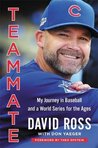
Teammate: My Journey in Baseball and a World Series for the AgesTeammate: My Journey in Baseball and a World Series for the Ages by David Ross
My rating: 4 of 5 stars

Really enjoyed this. Ross became a favorite player of mine for the World Champion Cubs team, and I'm so glad he wrote his story for us. One thing that stood out to me in this book is the importance of knowing human nature whatever job you are doing. David Ross, Cubs President Theo Epstein, and manager Joe Maddon became so successful because they get it that the human element is essential--character, motivation, trust. These things are more important than pure talent, stats, and algorithms. As someone who teaches in the humanities, I appreciated this aspect of the book. But all that aside, this is just a fun book to read. I loved the behind-the-scenes stories from the 2016 Cubs team and from Ross's own career.

View all my reviews

4/19/17

The Prelude The Prelude by William Wordsworth
My rating: 3 of 5 stars

I knew C. S. Lewis loved this poem, so I wanted to read it.

I enjoyed the first eight or nine books, which focus on Wordsworth's life and early intellectual growth. Specifically, I really enjoyed the passages where he recounts his youth in the Lake Country, his life at Oxford, a trip he took through Europe during the French Revolution, and a long vacation hiking in the Alps. He makes you feel as if you are there, and he has the same sorts of sehnsucht experiences that C. S. Lewis describes in Surprised by Joy. (In fact, the title "Surprised by Joy" comes directly from a Wordsworth poem.)

I read up to the point where the poem becomes almost totally philosophical, in the last three or four books. But in the portion that I read, there are passages that are beautiful and profound.

I am a man too much of my time, with too short an attention span, too little patience, and a mind affected too much by screens, to fully appreciate the poem. So three stars says more about me than it does about Wordsworth, who is one of the Greats.

View all my reviews

4/6/17

What to Remember When Waking: The Disciplines of an Everyday LifeWhat to Remember When Waking: The Disciplines of an Everyday Life by David Whyte
My rating: 2 of 5 stars

I enjoyed the commentary on writers like Shakespeare, Coleridge, Dante, and Wordsworth, and I enjoyed Whyte's own poetry (and his Scottish accent), but overall this is vague and abstract. Although I *hate* not finishing books, I jumped ship halfway through.

View all my reviews

3/25/17

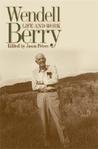
Wendell Berry: Life and WorkWendell Berry: Life and Work by Jason Peters
My rating: 4 of 5 stars

I've been reading Wendell Berry for about ten years now, and although I don't always agree with every jot and tittle in his books, I have great respect for him, and I have enjoyed and learned much from him.

In my view, his thought can be summed up in these lines from his poem "How to Be a Poet":

There are no unsacred places.
There are only sacred places
and desecrated places.

Berry helped me understand that this world is a wonderful, sacred place, and that we need to live here with a sense of gratitude, stewardship, and affection. In another of his books, he says, "I take literally the statement in the Gospel of John that God loves the world. I believe that divine love, incarnate and indwelling in the world, summons the world always toward wholeness." For Berry, love for God should not be thought of as consisting only in a spiritual realm, but should actually influence everything we do in our day-to-day activities. It should cause us to care holistically for our families, for our fellow man, and for the land God created. As Berry puts it, "It all turns on affection."

This book is an excellent, detailed summary of Berry's thought, influences on him, and his influence. Writers include Berry scholars, as well as his friends and fellow writers. I didn't read every essay, but I read most of them and found them helpful.

View all my reviews

12/22/16

The Legend of King ArthurThe Legend of King Arthur by Robin Lister
My rating: 5 of 5 stars

An excellent retelling of the Arthur stories in about 100 pages. This version is narrated by Merlin, and it really brings the legend to life in the imagination. A fun book to get lost in for a couple hours.

View all my reviews

11/25/16

Mormonism: A Very Short IntroductionMormonism: A Very Short Introduction by Richard L. Bushman
My rating: 4 of 5 stars

Well-written and helpful. I learned a lot. Three things stand out to me:

1. Stories (true or false) are powerful. Stories are the main factor in any type of community--ethnic, religious, national, family, neighborhood, and so forth. Shared stories are what binds us together to those we commune with.

2. The formational power of habit. The Mormons immerse themselves in ritual, both "high church," "low church," and within the family. These habits, followed week after week and year after year, form them into a certain kind of people. Habits are powerful.

3. Mormonism has a dark past, and although the author is sympathetic, I appreciate his willingness to deal with the issues head on.

View all my reviews
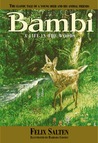
BambiBambi by Felix Salten
My rating: 4 of 5 stars

I know I'm odd, but as my daughters have watched the Disney version of Bambi, I actually enjoyed the mythic quality of the story. It's a lousy movie to watch, but a great movie to "read" if you know what I mean. So when I was with the kiddos at the children's section in the library, I saw the original novel on the shelf and picked it up.

The book is nothing like the cartoon. The real theme of the book is survival. Death and violence (even surprisingly graphic violence) loom large in the book.

What I like most about it is its coming-of-age theme. It has a "Joseph Campbellish" feel about it. The story is about what it means to grow, to mature, to gain wisdom.

View all my reviews

10/1/16

The Silmarillion (Middle-Earth Universe)The Silmarillion by J.R.R. Tolkien
My rating: 4 of 5 stars

This was much better the second time through, now that I had a basic familiarity with the world Tolkien has created.

The Silmarillion consists of the entire history of the Elves of Tolkien’s world. It shows the vastness of Tolkien’s imagination. The stories are varied: Some are glorious, some are heroic, many are sad . . . I really wish he would have developed them in more detail.

Beyond the stories, the book makes me reflect on the concepts of creation, fall, and redemption.

At first, the world Tolkien has created is beautiful and good in its unfallen glory. Actually, it’s probably similar to what this world would have been had it been developed for hundreds of years. Before the Elves leave Valinor, they have developed a beautiful culture of cities, light, and song. Ages pass, during which the Elves thrive, creating a glorious, peaceful world. Overall, in the first part of The Silmarillion, Tolkien incites our imagination to think of the world we could have had—more glorious than we can comprehend.

But in Tolkien’s world, like ours, there is a Fall. A fallen Vala (the Valar are essentially archangels who are entrusted with the rule of the world) seduces Feanor, an Adam figure, to rebel against the other Valar. Once Feanor rebels, evil begets evil, and it spreads until the whole world is infected. The whole book is really the working out of this Fall. Eventually, most of the Elves leave Valinor, and they build hidden kingdoms in Middle Earth, such as Gondolin and Rivendell. Over the ages, these hidden kingdoms fall or fade away.

The redemption of Tolkien’s world is really unfinished, but it’s interesting that Tolkien emphasizes the working out of Providence in the world’s affairs. In The Silmarillion, it is the will of Providence for the Elves to go back into the West so that the Age of Man will commence. Although the book ends with the same scene as The Lord of the Rings—the White Ship leaving from the Grey Havens—the emphasis is on the fact that this ship is leaving with the last of the Elves. This is because the Elves’ work is finished in Middle Earth, and now the Age of Man has fully come—and again, this is by the will of Providence.

Finally, I enjoyed Tolkien’s clever links to other legends. The Elvish haven of Avollone is a reference to Avalon of the Arthurian tales. Another reference to other myths is Atalante, or the island (continent?) of Numenor. Like Atlantis, Numenor is destroyed in cataclysm and swallowed up by the ocean. And finally, the character of Earendil (Elrond’s father) is an Odysseus figure—a wandering mariner about whom there are many tales.


View all my reviews

6/28/16

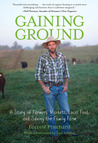
Gaining Ground: A Story of Farmers' Markets, Local Food, and Saving the Family FarmGaining Ground: A Story of Farmers' Markets, Local Food, and Saving the Family Farm by Forrest Pritchard
My rating: 4 of 5 stars

This is a great story by a man (an English major nonetheless) who realized that farming was just in his blood, and who didn't want to lose the family farm to Big Ag or urban sprawl. This book is well-written and encouraging. My wife and I are now following Smith Meadows on Facebook, and I hope to read his next book too.

View all my reviews

6/22/16

The Return of the King (The Lord of the Rings, #3)The Return of the King by J.R.R. Tolkien
My rating: 5 of 5 stars

I would agree with C. S. Lewis’s assessment of The Lord of the Rings: “Here are beauties which pierce like swords or burn like cold iron; here is a book that will break your heart."

First, I loved the sense of solemnity, or “pomp” in the old sense of the word, that emerges in Return of the King, especially in regards to Aragorn’s transformation from Strider into the King of Gondor. We Americans are so democratic/egalitarian that we don’t fully understand the solemnity of a monarch coming into his realm. But I love the scenes where Aragorn is crowned and where the city honors him. The language is formal. The ceremoniousness is appropriate. The tradition is deep. (It’s surreal reading these scenes while Donald Trump and Hillary Clinton are running for president.) There’s something good about formality and tradition and grandeur in a monarchy that we democrats (small "d") can’t really understand.

Second, the language. Tolkien has a wonderful sense of poetry in his prose. I enjoyed the poems he mixes in here and there, but even more, I love the way Tolkien elevates his prose to heighten a character’s emotion during a significant point in the story. Throughout the work, in scenes where a character experiences something unusually powerful, Tolkien adds figures of speech—metaphor, alliteration, formality. It reminds me of the way some of Shakespeare’s characters change from prose to iambic pentameter when they express powerful feelings.

One modest example is Sam’s attempt to describe Galadriel to Faramir: “I wish I could make a song about her. Beautiful she is, sir! Lovely! Sometimes like a great tree in flower, sometimes like a white daffadowndilly, small and slender like. Hard as di’monds, soft as moonlight. Warm as sunlight, cold as frost in the stars. Proud and far-off as a snow-mountain, and merry as any lass I ever saw with daisies in her hair in spring-time.”

A better example is Theoden’s summoning of the riders of Rohan just before they charge into the forces of Mordor besieging Gondor. As Theoden calls them to battle, his words have the alliteration of Anglo-Saxon poetry:

“Now is the hour come, Riders of the Mark, sons of Eorl! Foes and fires are before you, and your homes far behind. Yet, though you fight upon an alien field, the glory that you reap there shall be your own forever. Oaths ye have taken: now fulfil them all, to lord and land and league of friendship! . . . Forth now, and fear no darkness!”

Finally, throughout the series, I have also appreciated Tolkien's sense of place. The journey from the Shire finds its meaning in the simple, quiet goodness of the Shire itself. I love the scene where Pippin and Merry meet each other at long last in Minas Tirith, after the Battle of the Pelennor Fields. Pippin notes, "We Tooks and Brandybucks, we can't live long on the heights."

"No," said Merry. "I can't. Not yet, at any rate. But at least, Pippin, we can now see them, and honour them. It is best to love first what you are fitted to love, I suppose: you must start somewhere and have some roots, and the soil of the Shire is deep."

There’s so much more. This series helps us appreciate the Good, the True, and the Beautiful. What a glorious, magnificent book.


View all my reviews

5/30/16

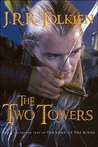
The Two Towers (The Lord of the Rings, #2)The Two Towers by J.R.R. Tolkien
My rating: 5 of 5 stars

This time through, it occurred to me that there are some parallels between Gondor at this point in the series and the nation of England at the time Tolkien was writing. Both nations had fallen from their former glory, yet not because of external strife, but because of a declining sense of nobility and virtue.

Tolkien, as a Roman Catholic and a lover of Anglo-Saxon culture, saw England at its greatest in the early medieval period, when Anglo-Saxon culture was strong, Catholicism reigned, and the language was uncorrupted yet by the Norman invasion. In contrast, Tolkien saw the England of his own time as fallen from these things into greed and decay. In The Two Towers, and in the whole series, Gondor is portrayed similarly. Gondor is great, but it is fallen from the majesty it once had.

One passage in which Tolkien communicates this idea is one of Faramir's conversations with Frodo and Sam in Ithilien. Faramir tells them, "The old wisdom and beauty brought out of the West remained long in the realm of the sons of Elendil the Fair, and they linger there still. Yet even so it was Gondor that brought about its own decay, falling by degrees into dotage. . . . We are become Middle Men, of the Twilight, but with memory of other things."

This is a good description not only of Gondor, but of England and other nations who have a heritage of former greatness and but a state of present decay.

I could go on--it's a fascinating and thought-provoking theme worth exploring in more depth.

View all my reviews

5/7/16

The Fellowship of the Ring (The Lord of the Rings, #1)The Fellowship of the Ring by J.R.R. Tolkien
My rating: 5 of 5 stars

Fourth time through, and more enjoyable than the first three times. I enjoyed . . .

1. The Shire. Having read a good bit of Wendell Berry since my last time through, I appreciate Tolkien's sense of place. The Shire is a lot like Port Royal, Kentucky. I love the quirkiness of the people, their rootedness in localities, the beauty of the landscape (in my imagination), its local history, its smallness, its lack of machinery ... It's a lot like I think heaven will be after a few hundred years. When you see the adventure as framed by the quietness of the Shire, you see the beauty and worth of quiet, decent, ordinary life.

2. Echoes of Shakespeare. I noted three or four when the Hobbits first meet Strider. This may have been unconscious, but Tolkien knew his Shakespeare.

3. I'm enjoying the poetry of Tolkien much more this time. In readings past, I honestly found the poetry a little annoying. Now I'm able to surrender to the mood of the book a bit more. Maybe it's because I'm in my late thirties. I also noticed that Tolkien loved iambic tetrameter.

View all my reviews

12/30/15

The Hobbit (Middle-Earth Universe)The Hobbit by J.R.R. Tolkien
My rating: 5 of 5 stars

This time through I noticed the theme of Providence throughout the story. So many seemingly random events are orchestrated for a higher purpose: Gandalf's choosing of Bilbo as the "burglar"; the fact that Bilbo and the dwarves happen to be at Rivendell on Midsummer's Day Eve, which happens to be the only night they can read the runes on Thorin's map; Bilbo's discovery of the Ring in the darkness of a cave; the fish that jumps out of the water and thus gives Bilbo the answer to one of Gollum's riddles that had him completely stumped; the fact that the dwarves and Bilbo are standing by the grey stone on Durin's Day as the thrush knocks and the setting sun shines light upon the keyhole.

The narrator refers to Bilbo's "good luck" throughout the book, but at the very, very end of the book, he brings out the role of Providence. Several years after the adventure, Bilbo is sitting in his living room with Balin and Gandalf, and he learns that all is well at the Lonely Mountain. Dale is rebuilt; the dwarves and the men and the elves are all getting along. Lake-town's new Master is wise and kind. Balin even tells Bilbo, "They are making sons which say that in his day the rivers run with gold."

"Then the prophecies of the old songs have turned out to be true, after a fashion!" said Bilbo.

"Of course!" said Gandalf. "And why should not they prove true? Surely you don't disbelieve the prophecies, because you had a hand in bringing them about yourself? You don't really suppose, do you, that all your adventures and escapes were managed by mere luck, just for your sole benefit? You are a very fine person, Mr. Baggins, and I am very fond of you; but you are only quite a little fellow in a wide world after all!"

View all my reviews

12/11/15

Mere ChristianityMere Christianity by C.S. Lewis
My rating: 5 of 5 stars

This was my third time through. Lewis isn't perfect, but overall this is a wonderful book. My favorite sections of the book are . . .

1) Lewis's argument that our common sense of right and wrong are clues to the meaning of the universe;

2) Lewis's argument for the deity of Jesus Christ (Because he claimed to be God, he was most emphatically not merely a good moral teacher. He was either a lunatic, a fiend, or God Himself);

3) Lewis's discussion of the cardinal virtues, the Christian virtues, and the seven deadly sins (Lewis shows great insight into the way we think); and

4) his explanation of how Christ transforms believers into new creatures--this section of the book is marvelous.


View all my reviews

7/16/14

Moby-Dick; or, The WhaleMoby-Dick; or, The Whale by Herman Melville
My rating: 4 of 5 stars

Finally, after over two months of chipping away at this, I’m done! Some reflections:

1. On the negative side, there is way too much detail about the ins and outs of whales and whaling. This takes away from the plot and makes the story tedious. I got bogged down in the middle. (But maybe that’s what Melville intends for the reader, since that's the nature of a whaling voyage.)

2. I also didn’t care for the mixed point of view. Some of the novel is from Ishmael’s perspective, some of it is third-person omniscient, and a few chapters are written like play scripts, complete with stage directions. But this was written a century and a half ago, so there are different rules in play. Of course, Pilgrim’s Progress works the same way.

3. As a lover of Shakespeare, I enjoyed the echoes of Macbeth in this novel. The prophecies, the equivocation, the dark supernatural elements, the threes, some of the language (“foul” and “fair”), the protagonist’s faith in a prophecy that makes him think he is invincible . . . Even Ahab’s relationship with the Carpenter seems to parallel Macbeth’s relationship with the physician. These connections add a lot of depth.

4. The foreshadowing and symbolism are superb. The novel is a lot creepier than I expected, even gothic. (What happens to Fedallah is one of the freakiest scenes I've ever read in my life!) There’s so much supernatural symbolism—coffins, omens, threes, fires, sermons, . . . And the symbolism is huge. Melville is exploring the biggest questions—What does it mean to be human? Who determines our destiny—God? Fate? Ourselves? Melville powerfully captures the idea of man’s defiance against all forces above—and man’s helplessness against his destiny. This is truly an epic novel, and Melville pulls out all the stops.


View all my reviews

6/21/14

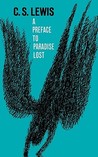
A Preface to Paradise LostA Preface to Paradise Lost by C.S. Lewis
My rating: 5 of 5 stars

Fantastic, especially in its refutation of modern Milton critics (including T. S. Eliot).

From Lewis's Conclusion:

[Milton's] art is eminently civil ... in the sense that it presupposes in those who are to enjoy it some discipline in good letters and good 'manners'. It demands that our merely natural passions should have already been organized into such 'sentiments' as ordered and magnanimous commonwealths prefer.... It will therefore be ... hateful to the baser spirits among them. It has been compared to the Great Wall of China, and the comparison is good: both are among the wonders of the world and both divide the tilled fields and cities of an ancient culture from the barbarians. We have only to add that the wall is necessarily hated by those who see it from the wrong side, and the parallel is complete. From this point of view the decline in Milton's fame marks a stage in the rebellion of [today's] 'civilization' against civility.


View all my reviews

6/11/14

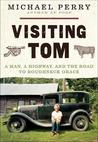
Visiting Tom:  A Man, a Highway, and the Road to Roughneck GraceVisiting Tom: A Man, a Highway, and the Road to Roughneck Grace by Michael Perry
My rating: 5 of 5 stars

At times funny, at other times sad, in the end reflective and powerful. This is a great book by a great writer. Perry is a real craftsman, and I love his books.

View all my reviews

5/14/14

Great ExpectationsGreat Expectations by Charles Dickens
My rating: 5 of 5 stars

I love coming-of-age stories, and Great Expectations is one of the best ones ever. Pip’s journey from childhood to adulthood, from innocence to experience, and from naiveté to an understanding of the ways of the world is a journey we all take. And at the end, Pip has learned about himself most of all. I hadn’t read Dickens in almost twenty years, but once I got into this, I couldn’t put it down.

P.S. The original ending is better. The second (happy) ending seems tacked on and contrived (which it was).

View all my reviews
A Christmas CarolA Christmas Carol by Charles Dickens
My rating: 5 of 5 stars

Through his fiction, Dickens shows us a truth that we need to be reminded of every day: that every one of our fellow human beings is a creature of inherent dignity and worth.

View all my reviews